


 Invite Others & Get paid
 9jawap Music
 Invite Friends
 Need Help
 FAQ
FAQ
 Collaborator Pro
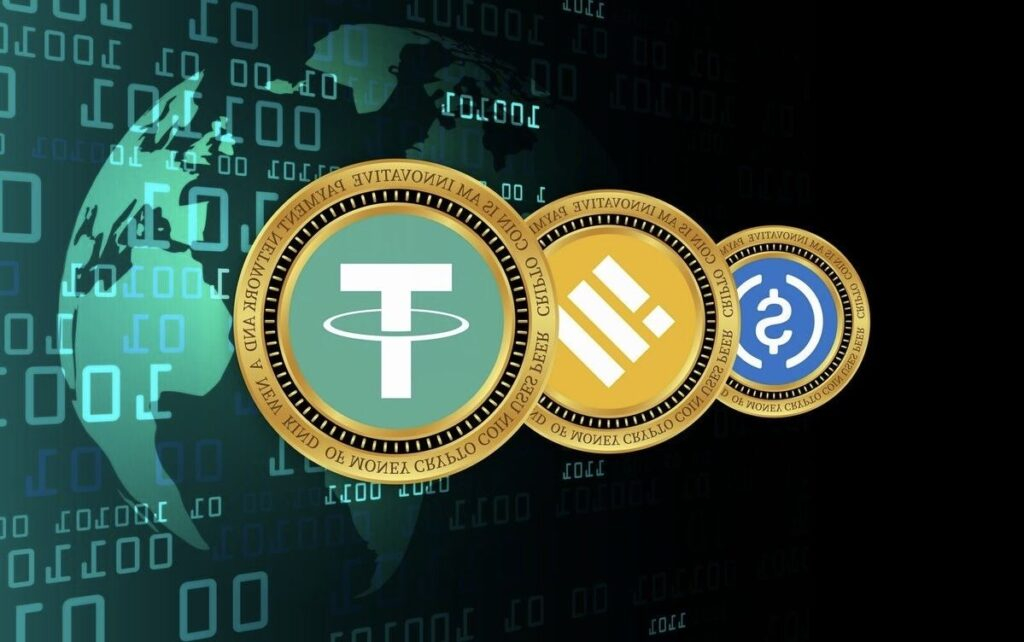
Understanding Stablecoins: How USDT Powers Financial Inclusion
What Is Money?
Definition and Function of Money:
Basic Definition: Money is a medium agreed upon by parties to settle exchanges for products, goods, or services.
Core Role: It allows resources or services to be swapped for stored value, enabling efficiency and economic growth.
Value Derivation:
Money is obtained by expending time and energy (e.g., work, labor, or services).
Resources or goods exchanged for money also require time and energy to create.
Formula: Money = Time + Energy
Functions of Money:
Store of Value:
Money retains purchasing power over time, enabling saving and future planning.
Example: Gold historically holds value (e.g., one ounce could buy a suit centuries ago).
Medium of Exchange:
Money must be easily exchanged for goods and services.
Assets like houses are impractical as a medium of exchange.
Unit of Account: Money provides a standard measure for pricing goods and services, aiding in value comparison.Characteristics of Money:
As a Store of Value:
Durable: Money withstands time and wear (e.g., gold retains value even if physical coins deteriorate).
Scarce: Limited supply ensures stability and maintains value.
Immutable: Transactions cannot be arbitrarily reversed or altered, ensuring security.
As a Medium of Exchange:
Portable: Easy to carry and use across locations.
Divisible: Can be broken into smaller units for transactions of varying sizes.
Accepted: Widespread acceptance enhances trade efficiency.
As a Unit of Account:
Fungible: Every unit is interchangeable and identical, ensuring uniformity.
Money enables trade, savings, and economic stability, fostering growth and prosperity.
Not all forms of money equally fulfil its functions. Some excel as stores of value (e.g., gold), while others are better mediums of exchange (e.g., US dollars, Nigerian Naira, Ghana Cedi ...etc).
Future exploration includes how modern forms of money, like Bitcoin and stablecoins, align with these functions.
By fulfilling its roles effectively, money enhances individual confidence in transactions and supports the overall economy.
Categories
- Artificial Intelligence
- Branding
- Content Marketing
- Copywriting
- Corporate Social Responsibility
- Creative Team
- Customer Service
- Digital Marketers
- Digital Marketing
- E-commerce
- Email marketing
- Entrepreneurs
- Entrepreneurship
- Frontend Web Development
- Graphic Design
- Growth Hacking
- Hiring
- Influencer marketing
- Inspirational Quotes
- Internet marketing
- Mobile App Development
- Partnership
- Public Relations
- Reputation Management
- Search Engine Optimization
- Small Business
- Social Media
- Social Media Management
- Social Media Managers
- Social Media Marketing
- Social Media Training
- Social Responsibility
- Software Development
- Team Spirit
- Technology Alliance
- Training
- Virtual Reality
- Voice Search Optimization
- Web Design
- Web Design training
- Website Optimization
- Public Figure
- Art
- Causes
- Crafts
- Dance
- Drinks
- Film
- Fitness
- Food
- Games
- Gardening
- Health
- Home
- Literature
- Music
- Networking
- Other
- Party
- Religion
- Shopping
- Sports
- Theater
- Wellness
Read More
Training for Reigning: Becoming the Leader You Were Born to Be Every great ruler was once an ordinary person undergoing extraordinary training. Behind every crown is a journey of sweat, tears, sacrifice, and refinement. Training for reigning is the process that transforms potential into power, dreams into dominion, and purpose into impact. Reigning is not just about...

--- Leadership Success: Becoming the Leader Who Makes a Difference By HENRY . E . OPUTA In every generation, true leaders rise—not just by title, but by the difference they make. Leadership success isn't about being the loudest in the room or holding the highest position. It's about influence, impact, and integrity. It’s about...